Weimar Republic
- In 1872 an architectural contest was held with 103 participating architects and was carried out to erect an all new-building.
- Previous to this contest the parliament was assembled in several other buildings in the Leipziger Strabe in Berlin, but these were deemed too small.
- Work on the Reichstag did not start until ten years later due to various problems with purchasing property for the new building and arguments between Wilhelm I and Bismark about how the construction should be managed.
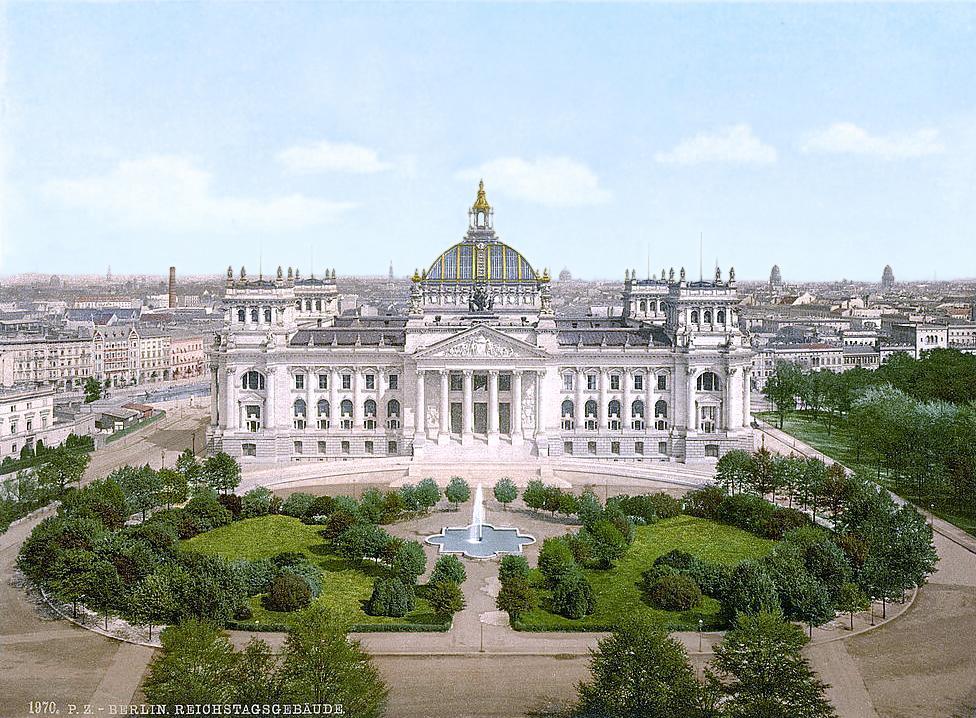
- In 1882, another architectural contest was held, with 189 architects participating. This time the winner was Paul Wallot. In 1884 the foundation stone was laid by Wilhem I.
- But before the construction was completed in 1894 Wilhelm I died in 1888, and his succesor Wilhelm II objected to the parliament as an institution to a much greater extent.
- The building was acclaimed for the construction of an original cupola of steel and glass, an engineering masterpiece at the time.
- After World War I had ended Wilhelm II abdicated, the building still continued to be the seat of the parliament of the Weimar Republic until 1933.